Tanner Carlock, MD: Wright State University, OBGYN, PGY-2
Honduras: October 2025
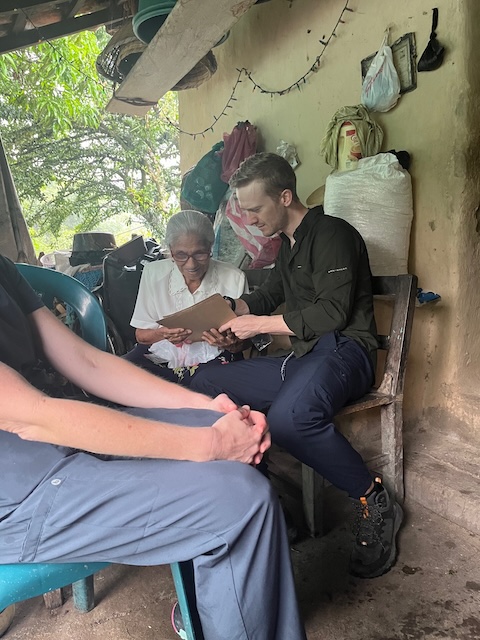
When I returned from Honduras last year, I expected the experience to settle into memory like most meaningful chapters do. Instead, it stayed vividly with me. I found myself thinking often about Guachipilincito-the patients we met, the challenges they faced, and the small but profound moments of connection that shaped our time there. Over the past year, I wondered how their lives had unfolded, whether our care had helped, and what it would feel like to return. As we made the long journey back into the mountains this year, those reflections filled the quiet stretches of road.
Arriving in the village felt both familiar and deeply moving. People remembered us, and surprisingly remembered me. A young girl I had helped the previous year by removing a bug from her ear ran up and hugged me when we returned to the school for dental teaching and fluoride application. That moment helped affirm the value of returning.
Once again, we were the only doctors within a I-hour driving radius. Many had walked an hour or more, sometimes up to three hours, to reach us. Along with our clinic work, I conducted home visits for some of our highest-risk children and young adults, including two patients I had visited last year. One young woman with epilepsy stood out. I was stunned to discover that her condition had worsened, experiencing up to ten seizures a day despite taking the low-dose antiepileptic her family could afford. She had a prolonged and disturbing seizure while we were visiting her home.
In that moment, I felt an overwhelming sense of responsibility. If our medical brigade exists for any reason, it is to help people like her. I reported back to our team and contacted the organization's board, which obtained additional medication and a second antiepileptic. I returned with the new regimen and spent nearly an hour reviewing instructions in Spanish. Weeks later, we learned she was experiencing only about one seizure per week. I felt fortunate to be there at the right time with the language skills to help provide life-changing care.
Yet the essence of medical care-listening carefully, examining thoughtfully, offering kindness-remains the same everywhere. Patients in Guachipilincito want what all patients want: to be heard, cared for, and treated with dignity. People may view a medical brigade as service to others, but it is the patients who offer the deeper service. Their trust, grace, and resilience continue to shape the way I see the world and the way I hope to practice medicine for the rest of my life. What I thought would be transformative last year was elevated to a new level this year.
I am deeply grateful for this second opportunity to return to Guachipilincito, made possible only through the generous support of the Benjamin H. Josephson, M.D. Fund. I am sincerely thankful to Dr. Josephson for his legacy, to the donors who sustain it, and to those who administer the fund. I was fortunate enough to again visit the maternal care clinic in Concepcion that carries his name, which holds special meaning for me as an OB-GYN. I feel a genuine connection to him and gratitude for the legacy he left behind, as well as for the funding that allows me to follow a similar path of service.
Thank you for investing in experiences that shape physicians and directly improve lives. This will impact the doctor I will be, and those I will train, for the rest of my long career. I carry this year's lessons forward with profound appreciation.